We use analytics cookies to understand how our site is used. You can change your choice through Cookie preferences in the footer.
We couldn’t save your choice. Check your browser settings and try again.
Choose whether to allow analytics cookies.
Support sign-in, your cart and checkout.
Turning this off reloads your open tabs. Save any edits first.
When you stand before your people to lead this song, you are doing more than just facilitating a musical moment; you are leading a jailbreak. There is a specific kind of spiritual amnesia that sets in during the week, where the pressures of life make us forget that we are actually walking around as free men and women. As a worship leader, your task is to use this song to remind the weary heart that the chains are not just loosened—they are gone. You are inviting the congregation to move from the somber reflection of the verses into the explosive, defiant joy of the chorus. This isn't just a song about what happened at the cross two thousand years ago; it is a song about the current state of your soul right now in this very room. The scriptures that anchor this truth are found in the heart of the New Testament. In Galatians 5:1, we are told that "It is for freedom that Christ has set us free. Stand firm, then, and do not let yourselves be burdened again by a yoke of slavery." This is the theological "why" behind the dancing. We aren't just happy because the music is upbeat; we are celebrating because our legal status has changed from "slave" to "child." Romans 6:14 further reminds us that "sin shall no longer be your master, because you are not under the law, but under grace." When you sing about being "dead in sin" but "dancing on that grave," you are standing on the promise of Romans 6:4, which declares that "just as Christ was raised from the dead through the glory of the Father, we too may live a new life." These aren't just lyrics; they are the blood-bought realities of every person standing in your sanctuary. To truly engage with this song during your preparation or as part of a mid-service reflection, consider these questions. First, what specific "grave" is the enemy trying to convince you that you still live in? Is it the grave of a past mistake, a broken relationship, or a secret struggle? Grace doesn't just visit us in that grave; it pulls us out and lets us stand on top of it. Second, when was the last time the "sound" of grace actually felt sweet to you? If it has started to feel like a dry or dusty concept, what would it look like to ask the Holy Spirit to let you hear it as a "sweet sound" once again this morning? Finally, how does the truth that Jesus "called you by name" change the way you approach Him? He didn't just save a crowd; He sought out you, specifically and intentionally. As you lead, let your posture reflect the reality of the bridge: "My heart is free, my soul is saved." If we believe the grave is empty, we cannot lead with a spirit of heaviness. We lead with the "Hallelujah" of people who have seen the light after a long night of blindness. This song is an invitation to stop mourning over what we used to be and start celebrating what Christ has made us. A Closing Prayer Heavenly Father, we thank You that Your grace is not a fragile thing that depends on our performance. Thank You that when we were lost and blind, You didn't wait for us to find our way; You came and found us. Lord, as we sing these words, let the truth of our freedom move from our heads to our hearts. Break the power of any lingering shame that tells us we are still defined by our past. We thank You that the grave no longer has a hold on us because it couldn't hold Your Son. Let our worship today be a testimony to the world that You are a God who sets the captive free and gives us a reason to dance. It really is amazing grace, and we give You all the praise. Amen.
There is power in a name. Some names evoke memories, others carry authority, but there is only one Name that has the power to silence storms, defeat death, and bring the dead to life—the Name of Jesus. Throughout Scripture, we see the incredible authority of Jesus' Name. When spoken, demons trembled (Luke 10:17), sickness vanished (Acts 3:6), and salvation became a reality (Acts 4:12). His Name is not just a title; it is a declaration of His character, His power, and His victory over sin and death. The Name That Breaks Chains In I Know A Name, we declare that when we call on Jesus, chains break and dry bones wake. This echoes Ezekiel 37, where God commands the prophet to speak to the valley of dry bones, and by His word, life is restored. The same is true for us today. Whatever feels lifeless—our faith, our joy, our hope—can come back to life in Jesus' Name. Are there areas in your life where you feel bound or dry? Call on His Name. Philippians 2:9-11 reminds us that God has given Jesus the Name above every name, and at His Name, every knee will bow. That includes every fear, every struggle, and every stronghold. The Name That Shakes Hell When we sing, "The gates of hell shake every time I call Your Name," we are reminded of Jesus' promise in Matthew 16:18—"I will build My church, and the gates of hell shall not prevail against it." The enemy has no power over a believer who stands firm in Jesus' Name. Whatever battle you face, know this: the darkness trembles when you speak His Name in faith. The Name That Brings Resurrection The bridge of the song proclaims, "Dead things come alive in the Name of Jesus." This isn't just poetic language—it's the heartbeat of the Gospel. Jesus didn't just defeat death for Himself; He did it for us. When He called Lazarus from the grave (John 11:43), life returned. And today, He is still calling dead things back to life—dreams, relationships, faith, and even our very souls. Call on His Name Today No matter where you are, no matter what you face, there is power when you call on Jesus. If you need healing, call Him your Healer. If you need freedom, call Him your Deliverer. If you need strength, call Him your Sustainer. The Name of Jesus isn't just something we say—it's who He is. He is alive, reigning in power, and when we speak His Name in faith, something shifts in the spiritual realm. Today, take a moment to call on His Name. Whisper it in worship. Declare it in confidence. Shout it in victory. And watch as chains break, dry bones wake, and the very gates of hell shake in response. Prayer Jesus, Your Name is above every name. When I call on You, I know You hear me. Today, I bring You every burden, every fear, and every dead thing in my life, and I declare that You have the power to bring life and freedom. Strengthen my faith to trust in Your Name, and let me walk in the authority and victory that is mine through You. In Jesus' Name, Amen.
In the vast symphony of the universe, every sunset, mountain peak, and crashing wave offers a "melody of all creation." Yet, as the opening verse of "Who Else" reminds us, there is a specific, intimate song of praise that only a redeemed human heart can bring. We were not merely created to exist; we were designed as "instruments of exaltation," born with the singular purpose of lifting high the name of Jesus. While the stars may declare His glory and the trees clap their hands, they cannot testify to the power of a life transformed by grace. The lyrics draw a stunning contrast between the "infinite God of the ages" and His choice to make the human heart His "dwelling place." This is the mystery of the Gospel: that the One who is "seated on the throne above" would choose to inhabit our brokenness. When we contemplate His holiness, we are compelled to ask the central question of this anthem: "Who else is worthy?" In a world that constantly auditions candidates for our attention, affection, and worship, the believer finds that every other idol falls short. There is no one else who can heal our brokenness, and therefore, there is no one else who deserves our total devotion. The heart of the song's message is found in the unique perspective of the believer—one that "not even angels sing." The angels have seen God's glory and have stood in His holy presence since the dawn of time, but they have never known the experience of being lost and then found. They have never felt the weight of sin being lifted or the warmth of a Father's love proving itself through the shed blood of a Savior. Our praise carries a weight of gratitude that is specific to the rescued. When we sing "Holy, Holy," we aren't just echoing the celestial choir of Revelation 4:8; we are singing it as the "Righteous One's" adopted children, redeemed by the "Lamb of God." As we lift up the name of Jesus, we align ourselves with the eternal reality that He is the "Anointed One, who was and is and is to come." This anthem is a call to move beyond general spirituality and into a specific, high-exaltation of Christ. It acknowledges that while God hears the melody of all creation, He is uniquely moved by the "song of thanks" rising from a heart He has healed. Today, as you reflect on the Father's love proven at the cross, remember that you have a unique voice in the choir of eternity. Your testimony of grace is a melody that belongs to Him alone. Reflection Questions The lyrics say, "There's a song of praise that only I can bring." When you look at your personal journey, what specific "note" of God's goodness can you sing that no one else can? In your daily life, who or what else is competing for the title of "Worthy"? What would it look like to consciously displace those things and put Jesus back on the throne of your heart? The bridge describes Jesus as the "Righteous One who shed His blood to prove the Father's love." How does focusing on the sacrifice of Christ change the way you view God's feelings toward you? A Prayer of Exaltation Lord Jesus, I acknowledge today that You alone are worthy of my worship. There is no one else who could heal my brokenness, and no one else who would choose to make my heart Your home. I thank You for being the Lamb of God who was and is and is to come. Forgive me for the times I have given my best praise to things that are not You. I lift my voice today to sing the song only I can sing—a song of a life rescued by Your grace. Be glorified in me, Holy and Righteous One. Amen.
There is something beautifully simple about trust. Not complicated theology. Not striving. Not proving. Just taking Jesus at His word. So often we complicate faith. We look for signs, confirmations, perfect circumstances. Yet the sweetness of trust is this: resting on what He has already said. When He promises to be near, He is near. When He promises to save, He saves. When He promises to finish what He started, He will finish it. There is no one like Him. No rival. No substitute. No one else worthy of carrying the weight of our hope. To call Him faithful is not poetic language—it is lived experience. He has been steady when everything else shifted. To call Him Savior is not religious jargon—it is the confession of someone who knows they could not rescue themselves. He is holy, set apart, unmatched. And yet, astonishingly, He responds when we whisper His name. The image of Jesus “coming running” captures the heart of the gospel. God is not distant or reluctant. He is not annoyed by our need. When we call, He answers. Not because we deserve it, but because He delights in His children. He is the Rock of our salvation, the King who bore our cross. The grave had no authority over Him, and therefore it has no final authority over us. We call Him on the mountain, when prayers feel easy and praise flows freely. We call Him in the valley, when the night feels long and the enemy feels close. We call Him in gratitude. We call Him in desperation. We call Him simply to say, “I love You.” And in every season, He remains the same. He did not leave us as He found us. He heals what was broken. He provides where there was lack. He defends when we feel surrounded. He answers. Again and again, He answers. There is freedom in knowing that only One deserves to be called God. When Jesus alone holds that place in our hearts, everything else finds its proper size. Fear shrinks. Pride softens. Hope rises. Today, whatever terrain you are walking—mountain or valley—call His name. Trust Him at His word. Rest on His promise. And remember: the One you call is faithful to answer.
"The King is in the room, Lord we enthrone You upon our praise..." There are moments in life when we need a reminder that Jesus is not distant or detached—He is here. Right now. In the room. In the midst of whatever battle you're facing, whatever burden you're carrying, whatever joy or sorrow is present in your heart—He is with you. The song The King Is In The Room by Phil Wickham powerfully declares this truth. Jesus, our King, isn't just seated on a heavenly throne; He is present and active in our lives. When He steps into a situation, transformation happens. Chains break. Hearts are made whole. Fear flees. Hope rises. The King's Presence Brings Freedom The lyrics proclaim:"Come see all the captives run free, He's tearing down the walls..." Throughout Scripture, when Jesus entered a room, things changed. The sick were healed (Mark 5:41-42), the lost were found (Luke 19:9-10), and even the dead were raised (John 11:43-44). The same Jesus who walked into homes, villages, and temples is the same Jesus who walks into your circumstances today. He has the power to set you free from sin, shame, and fear. Is there an area in your life where you need His presence to break through? A stronghold that needs to fall? A heart that needs healing? He is not waiting for the perfect moment—He is already in the room, and His power is at work. The King's Presence Invites Our Surrender "Jesus, we bow only to You, we're laying down all of our crowns." When we acknowledge His presence, our response is worship and surrender. Just as the wise men laid their gifts before Jesus at His birth (Matthew 2:11), we are called to lay down our crowns—our pride, our fears, our control—and enthrone Him as King over our lives. Are you holding onto something that needs to be surrendered? A burden, a dream, a fear? Lay it before Jesus today. The King is already in the room, ready to take it and replace it with peace and freedom. Prepare the Way "I can't wait to see what He's gonna do, ev'ry mountain has to move." The song ends with a powerful charge: Prepare the way! Just as John the Baptist called people to prepare for Jesus' ministry (Mark 1:3), we are invited to make room in our hearts, churches, and lives for His power to move. Are you expectant for what God is going to do? Are you preparing your heart to receive His presence? No matter where you are today, take a moment to welcome Him in. Prayer:Jesus, I acknowledge that You are here. You are not far away, but near, active, and moving in my life. I lay down my fears, my pride, my burdens, and my plans before You. Have Your way in me. Tear down walls, break chains, and make me new. I prepare the way for You to move, and I worship You as my King. Amen. Reflection Questions: Where do you need Jesus to bring freedom in your life? What “crown” do you need to lay down before Him today? How can you prepare the way for the King's presence in your daily life? Let's live with expectancy—the King is in the room.
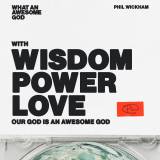
Sometimes a song doesn't just speak truth—it shakes it loose in our hearts. Phil Wickham's rendition of What An Awesome God breathes new life into Rich Mullins' timeless anthem. With a fresh blend of reverence and testimony, this version walks us through the awe-inspiring majesty of God's nature and His unstoppable love for us in Christ. 1. The Majesty of His Might "Fire in His eyes, healing in His veins / Everywhere His glory on display." Look up at the stars tonight. Every one of them burns under the sovereign gaze of a Creator who knows them by name (Isaiah 40:26). The same God who speaks galaxies into existence also walks into broken hospital rooms and brings healing. He commands the wind and waves and still knows the number of hairs on your head (Matthew 10:30). That's not distant power. That's personal majesty. 2. The Mercy in His Movement "Even when I ran, He didn't run away / He came and put death back in its place." Our awesome God is not only strong—He is good. He didn't stay in heaven while we wandered. He came down. Took the cross. Broke the curse. And on Sunday, He rose. The scars in His hands and feet aren't reminders of defeat—they're declarations of victory. Because of Jesus, shame no longer has the last word. The grave doesn't hold the final note. Hallelujah! 3. The Hope of His Return "Eyes on the sky, there will be a day / He will come and wipe our tears away." This world is not the end of the story. The aches of this life will one day dissolve in the light of Christ's return. No more fear. No more pain. He is coming again—not with a sword to condemn but with hands to restore. Until then, we live in anticipation, lifting our voices with saints and angels: “You are worthy!” Worship ResponseLet this song not just be something we sing—let it be how we live. In awe. In gratitude. In surrender. Whether you're facing something overwhelming today or feeling the weight of the ordinary, remember this: You serve a God who reigns with wisdom, power, and love. And that is more than enough. PrayerLord, You are an awesome God. Thank You for Your glory, Your grace, and Your promises. Help me to live in awe of You today—not just in song, but in every word, decision, and step. May my life be a chorus that never stops proclaiming Your greatness. Amen.
Christus Victor: Understanding Christ's Ultimate Victory In the rich tapestry of Christian theology, few concepts capture the majesty and power of Christ's work as profoundly as Christus Victor - "Christ the Victor." This ancient understanding of Christ's redemptive work, which gained prominence in the early church through theologians like Irenaeus and Augustine, presents Jesus not merely as a sacrificial lamb, but as the triumphant king who has overcome every power that stands against God's people. The phrase "Christus Victor" emerged from the early church's meditation on passages like Colossians 2:15, which declares Christ as "disarming the powers and authorities, making a public spectacle of them, triumphing over them by the cross." This victory motif runs deep through Scripture, from God's deliverance of Israel through the Red Sea (Exodus 14:13-14) to Christ's resurrection breaking the power of death itself (1 Corinthians 15:54-57). O Most High King of the ages Great I AM, God of wonders By the blood You have redeemed us Led us through mighty waters In this powerful anthem, the Getty team, along with Matt Boswell, Matt Papa, and Bryan Fowler, have crafted a declaration of Christ's supreme victory that echoes through the ages. The opening proclamation draws directly from biblical titles of God (Psalm 47:2, Exodus 3:14) and sets the stage for a song that will traverse the full scope of Christ's victorius work. The first verse connects Christ's redemptive work to the Exodus narrative, pointing to Christ as our "strength our song our sure salvation" - echoing Moses' song of deliverance in Exodus 15:2. Now to the Lamb upon the throne Be blessing honor glory power For the battle You have won Hallelujah, Amen The second verse brings us to the incarnation, addressing Christ as "Son of Man" - Jesus' favorite self-designation (appearing 88 times in the Gospels) - and "sent for sinners" (1 Timothy 1:15). The progression "Who lived who died who rose victorious" presents the gospel in its most concise form, reflecting Paul's summary in 1 Corinthians 15:3-4. The chorus's response draws directly from the worship scenes in Revelation 5:13. With every tribe and every tongue We join the anthem of the angels In the triumph of the Son Hallelujah, Amen The inclusion of "every tribe and every tongue" reflects the universal scope of Christ's victory, prophesied in Daniel 7:14 and celebrated in Revelation 7:9. This victory belongs not just to one people or time, but to all who trust in Christ throughout history. The final verse looks forward to Christ's return, where He appears as "King of the nations, Robed in praise crowned with splendor." This imagery draws from Revelation 19:16, where Christ returns as "KING OF KINGS AND LORD OF LORDS." O Most High King of the nations Robed in praise, crowned with splendor On that day who will not tremble When You stand Christ the Victor Who was and is and is forever The bridge's threefold "Amen" mirrors the pattern of heavenly worship in Revelation 19:4, where the twenty-four elders and four living creatures fall down in worship, saying "Amen, Hallelujah!" The song concludes with the triumphant call to "Sing the victory of the Lamb," joining the eternal song of heaven described in Revelation 15:3-4. Sing the victory of the LambHallelujah Amen Amen In a world that often feels chaotic and threatening, this song reminds us that Christ's victory is not just a future hope but a present reality. Through His victory, we find strength for today's battles, comfort in our struggles, and confidence in our witness. As Isaiah 25:8 prophesied and 1 Corinthians 15:54 confirmed, "Death has been swallowed up in victory." May this anthem strengthen our faith in Christ's complete victory and embolden us to live as those who share in His triumph, until that day when every knee bows and every tongue confesses that Jesus Christ is Lord, to the glory of God the Father (Philippians 2:11). For as the song declares, He truly is the one "Who was and is and is forever" - the victorious Christ who reigns eternal.
There is a kind of worship that is fueled by momentum, and there is a kind that is sustained by gratitude. The first can carry a moment. The second can carry a lifetime. As worship leaders and musicians, we live in the tension of visibility and vulnerability. We stand in front of people while privately walking through our own unfinished stories. We lead songs about faith while sometimes wrestling with fear. We call others to lift their voices while quietly asking God to steady our own hearts. And somewhere in that tension, gratitude becomes more than a lyric—it becomes survival. Thankfulness reorders the soul. It reminds us that we are not on the platform because we have achieved spiritual perfection, but because we have received mercy. We do not sing as experts in holiness; we sing as evidence of grace. The breath in our lungs, the gift in our hands, the opportunity to serve the Church—none of it is earned. All of it is given. Gratitude also protects us from the subtle drift toward performance. When worship becomes primarily about execution, excellence slowly replaces awe. But when the heart is anchored in thanksgiving, excellence becomes an offering rather than a measurement. We rehearse diligently, we prepare thoughtfully, but our confidence is not in the polish of the moment. It is in the faithfulness of God. There is something deeply stabilizing about remembering what He has already done. The cross is not a distant doctrine; it is the reason you are still standing. The forgiveness you preach through song is the forgiveness that restored you. The faithfulness you declare over the room is the same faithfulness that carried you through seasons no one else saw. When you lead from that awareness, your worship stops being theoretical and becomes deeply personal. And gratitude does not only look backward. It reaches forward with expectation. To thank God for what He is still going to do is to trust His character beyond what you currently see. Every worship leader knows the ache of praying for more—more breakthrough, more hunger in the room, more transformation in the church. Gratitude in advance keeps hope alive without slipping into striving. It says, “I trust You not because everything is visible, but because You have always been faithful.” Perhaps the most honest confession a worship leader can make is this: words are not enough. There are Sundays when emotion feels thin. There are rehearsals that feel routine. There are seasons where your own heart needs ministering. Yet gratitude keeps you showing up. It steadies your steps. It reminds you that worship is not sustained by hype, but by remembrance. In the end, the most powerful thing you can cultivate in your ministry is not complexity or intensity, but a deeply formed, unwavering thankfulness. A leader who is genuinely grateful carries a different weight in the room. There is authority in it. There is peace in it. There is freedom in it. So before you step onto the stage again, let your heart settle into this posture. Not polished. Not perfect. Just grateful. Because the worship that lasts is not built on talent—it is built on thanksgiving.
Scripture: “I will never leave you nor forsake you.” — Hebrews 13:5 There are moments in life when uncertainty looms, when circumstances shake us, and when our faith is tested. In those times, we are faced with a choice: to stand firm on God's promises or to let doubt creep in. The song I Know That I Know by The Belonging Co is an anthem of unwavering faith—a declaration that, no matter what comes, we can be sure of God's goodness and faithfulness. A Faith That Stands Firm The first verse reminds us of a fundamental truth: God has been good all our lives. His character does not waver, and His promises never fail. “You've been good, good for all my life. So nothing could ever change my mind.” No situation—no valley, no storm—can change who He is. When we reflect on our lives, we can see His faithfulness woven through every season, both in the highs and the lows. But faith isn't just about what we've experienced. It's also about what we choose to believe, even when we can't see. “I've got a faith that's sure of things I cannot see.” This echoes Hebrews 11:1, which says, “Now faith is confidence in what we hope for and assurance about what we do not see.” True faith stands even when sight fails, even when the road ahead is unclear. A Faith That Anchors The second verse declares a bold commitment: “I won't look to the left or right, and I will keep heaven in my sight.” How often do distractions pull our gaze away from Jesus? When Peter walked on water, he was fine as long as his eyes were on Christ. But the moment he focused on the wind and waves, he began to sink (Matthew 14:29-30). This song reminds us to fix our eyes on Jesus, the author and perfecter of our faith (Hebrews 12:2). The bridge drives this truth even deeper: “I won't stand on words of man, God I'll stand on Yours instead.” Human wisdom is fragile. Trends shift, opinions change, and promises are broken. But the Word of God stands forever (Isaiah 40:8). When we anchor our lives in His truth, we build on an unshakable foundation (Matthew 7:24-25). A Faith That Declares Worship is more than just words—it's a declaration of what we know to be true. The chorus bursts forth with confidence: “Oh, I know that I know, You won't ever let me go.” This is not a hesitant hope; this is a certainty that God is faithful in every high and every low. David echoes this in Psalm 37:25: “I have been young, and now am old, yet I have not seen the righteous forsaken.” Even when circumstances suggest otherwise, we can boldly proclaim that God is still good. He is still working. He is still holding us. A Faith That Endures As the song closes with repeated declarations—“You're faithful all the time”—we are reminded of Lamentations 3:22-23: “Because of the Lord's great love we are not consumed, for His compassions never fail. They are new every morning; great is Your faithfulness.” No matter what season you are in today, let this song be your anthem. Stand firm. Keep your eyes on Jesus. Declare His faithfulness. Because in the end, when all else fades, one thing remains: We know that we know—our God is good, and He will never let us go. Reflection Questions: When has God proven His faithfulness in your life? What distractions are pulling your focus away from Jesus? How can you anchor your heart in God's Word instead of the words of man? What promises of God do you need to declare over your life today? Prayer:Lord, thank You for being faithful all the time. Help me to stand firm on Your promises, even when I cannot see the way ahead. Strengthen my faith so that I will not be moved by circumstances, but instead, I will fix my eyes on You. I declare today that I know that I know—You are good, and You will never let me go. Amen.
Scripture:"Bless the Lord, O my soul, and all that is within me, bless His holy name!" – Psalm 103:1 (ESV) A Call to Bless God in Every Season The song Bless God, arranged by Travis Cottrell, is an anthem of worship and surrender, calling us to bless the Lord in every season of life. It echoes the heart of Psalm 103, where David reminds his soul to praise God—not based on circumstances, but because God is always worthy. The lyrics speak of blessing God in the sanctuary and the fields of plenty but also in the darkest valleys and when our hands are empty. This is the essence of true worship—praising God not just in abundance but in the waiting, the struggling, and even in suffering. Blessed Are Those Who Trust in Him The first verse reminds us of the promise that those who run to Jesus, seek His face, and fix their gaze on Him will not be shaken. In a world that constantly shifts, this assurance is an anchor for our souls. When we choose to fix our hope on Jesus, we are choosing stability, security, and peace that surpasses understanding. "Blessed are those who seek His face, who bend their knee and fix their gaze on Jesus, they won't be shaken." Have you placed your hope in Christ today? If the storms of life are shaking you, take a moment to re-center your focus on Him. He is your firm foundation. A Pilgrim's Heart The second verse calls us to walk with God on the journey of faith, setting our hearts on pilgrimage. To be a follower of Jesus means to embrace a journey—not always easy, but always leading us to His glory. "Blessed are those who walk with Him, whose hearts are set on pilgrimage, with Jesus, they'll see His glory." What does it look like to live as a pilgrim today? It means daily surrender, choosing obedience, and walking by faith rather than sight. When we give our lives fully to Jesus, we find the greatest joy in living for Him alone. Worship as a Sacrifice The bridge of Bless God challenges us to worship even when it costs us something: "Bless God when my hands are empty, bless God with a praise that costs me." There are moments in life when worship doesn't come easily—when our hearts are heavy, our prayers seem unanswered, and the weight of trials presses down. Yet, it is in these moments that our worship becomes a sacrifice, an offering of trust. Job, after losing everything, still declared: “The Lord gave, and the Lord has taken away; blessed be the name of the Lord” (Job 1:21). That kind of worship changes us. It realigns our perspective and reminds us that our faith is not built on what God does for us but on who He is. Every Chance I Get The repeating tag, "Every chance I get, I bless Your name," is a powerful reminder that worship is not confined to a Sunday service or a moment of music—it's a lifestyle. We are called to bless God with our words, our actions, our work, and our obedience. Today, take a moment to bless the Lord. Not just in your comfort, but in your struggle. Not just in your victories, but in your waiting. Lift your voice, lift your hands, and declare that He is worthy—every chance you get. Reflection Questions: Where in your life do you need to shift your focus back to Jesus so that you will not be shaken? What does it mean for you to have a "pilgrim's heart" in your walk with Christ? How can you worship God today, even if it costs you something? What is one way you can make blessing God a daily habit, not just a moment in church? Prayer:Lord, I bless Your name today—not just in the good times but in every season. Teach my heart to trust You fully, to seek You earnestly, and to praise You unconditionally. Whether in abundance or need, joy or sorrow, I choose to worship You. Every chance I get, I will bless Your name. Amen.